

Assessment and contract review
We read the contract, the correspondence and the project records, then tell you what your position is and what the applicable deadlines are. This is the point at which most matters are either preserved or quietly lost.

An unpaid progress claim, a direction to rectify, a defect list that keeps growing, a builder who has stopped answering the phone. Building and construction disputes in Queensland run on statutory deadlines, and most of them are shorter than people expect.
Tell us where the project is up to and what has been served on you. It takes about a minute, and most of the deadlines on this page are shorter than people expect.
Or call (07) 5370 8759 and speak to our experts directly.
Odyssey Legal acts in these disputes for both sides of the contract. We are based in Maroochydore and we act for builders, contractors, subcontractors, homeowners, developers and bodies corporate across Queensland.
The law treats these two positions very differently, and so does this page.

Some readers are in both positions at once. A developer chasing a head contractor while defending a subcontractor claim is a common enough scenario in Queensland.
Eight ways a Queensland building job ends up in dispute. Every one of them runs on a deadline, and the deadline is usually the first thing to go.


If yours is not on this list it is almost certainly a variation of one that is. The first question in every one of them is the same: what has already been served, and what is the clock on it.
The Building Industry Fairness (Security of Payment) Act 2017 (Qld), known as the BIF Act, gives you a statutory right to progress payments. It applies whether or not your contract says anything about them.
That right only works if the claim is made properly. A payment claim is not an invoice with a different heading. It has to:
Get one of those elements wrong and you may be outside the Act entirely, which leaves you with an ordinary breach of contract claim: slower, and considerably more expensive.

Small residential jobs under the indexed threshold, contracted directly with a homeowner
Work performed outside Queensland

This is the sequence that decides whether you get paid quickly or not at all. Every figure below is in business days.
A respondent can only rely in an adjudication response on reasons already set out in the payment schedule, so a schedule drafted in haste narrows the defence permanently. And a payment schedule of nil is permitted, provided the reasons are stated properly.
The adjudication process is fast by design. A decision usually arrives in weeks rather than years.
A defect complaint is not only a money problem. The QBCC can issue a direction to rectify, and it can take licensing action.
The commission has six years and six months from completion of the building work to issue a direction to rectify structural defective work. That is a long exposure, and it runs regardless of what your contract says about the defects liability period.
A direction to rectify operates independently of your contractual right to be paid for other work. A dispute about a window frame does not, by itself, extinguish your entitlement to payment for the roof.
Show cause notices, financial requirements assessments and licence conditions all carry short response windows. Responding without advice, or not responding at all, is how a payment dispute turns into a licensing problem.
If you hold an unpaid adjudicated amount and the party who owes it will not pay, you can look further up the contractual chain. A payment withholding request requires the higher party to hold the amount they owe your debtor and direct it to you instead. It gives you a charge over the withheld money and it works even where the party you contracted with has no assets left.
Where the debtor is a company with no genuine dispute about the debt, a statutory demand may apply more pressure than any further correspondence will. Where a judgment already exists, recovering the debt becomes an enforcement exercise.
Timing matters more here than anywhere else on this page. Once a head contractor enters external administration, the practical options narrow quickly.
Our guide to claiming progress payments sets out the mechanics in detail.
Two separate sets of deadlines run at the same time, and they are frequently confused. One governs your complaint to the QBCC. The other governs a claim under the Queensland Home Warranty Scheme, and it is much shorter.

Four pathways, and the two clocks on each of them. They do not run together, which is the whole reason all four are on the page at once rather than one behind a tab.
The practical consequence is that an owner can still be well within the six year contractual limitation period and yet have lost the home warranty claim months earlier. Those two clocks do not run together.
Before lodging a complaint, you are expected to raise the defect with your contractor and give them an opportunity to fix it.
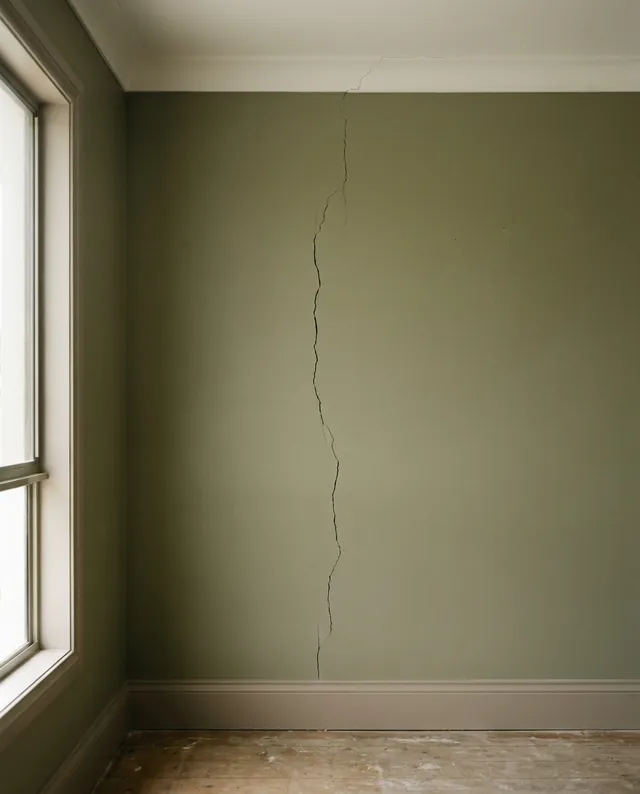
Defective building work is work that does not meet the required standard: structural problems, poor workmanship, or work that does not comply with the plans, the contract or the applicable standards.
Queensland draws a hard line between structural and non-structural defects, and the distinction decides how long you have. It also draws a line between defective work and a contractual dispute. The QBCC has real powers over the first and limited powers over the second, which is why an owner with a payment or variation argument sometimes finds the complaint process unhelpful.
Domestic building contracts also carry statutory warranties implied by Schedule 1B of the Queensland Building and Construction Commission Act 1991 (Qld). Those warranties sit underneath your contract whether or not the contract mentions them.
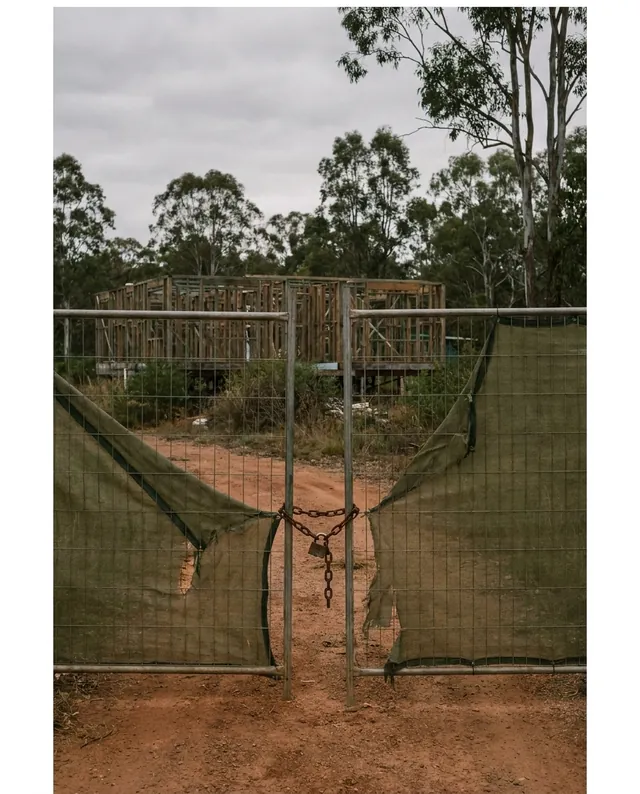
An abandoned build raises three questions at once: whether the contract has been repudiated, whether the home warranty scheme responds, and whether there is anything left to recover from.
Terminating in response to an abandoned site feels obvious and is legally risky. Not every breach gives rise to a right to terminate, and a termination that turns out to be unlawful exposes you to a damages claim from the builder. Advice before termination costs considerably less than the argument afterwards.
Where the builder is a company that has entered administration or liquidation, the questions shift to proof of debt, the statutory insurance position, and in some cases the conduct of the directors. We deal with those issues through our insolvency and liquidation practice.
Three forums, overlapping subject matter, and different rules about what each one can do. Choosing the wrong one costs months.


Two traps sit inside that comparison. Filing a building dispute in QCAT without the QBCC letter can see the application refused at lodgement or dismissed later. And a respondent to a major commercial building dispute can decline to consent, which removes QCAT's jurisdiction entirely and pushes a matter you had planned to run cheaply into court.
One further point for owners. Adjudication under the BIF Act generally does not apply to residential construction contracts where the owner lives or intends to live in the building. Owners in that position are usually on the QBCC and QCAT pathway rather than the security of payment pathway.
Delay in construction disputes is not neutral. It removes options.
Statutory deadlines expire and cannot generally be extended. Site conditions change and the evidence goes with them. Witnesses leave. And the longer an unpaid claim sits, the greater the chance the party who owes you stops being able to pay at all, which turns a recoverable debt into a proof of debt in an administration.
The reverse is also true for respondents. A payment schedule prepared carefully in the first fifteen business days shapes every argument available afterwards. One prepared in the last two days rarely does.

We act in building and construction matters every week, and the industry credentials behind that are real ones.

We read the contract, the correspondence and the project records, then tell you what your position is and what the applicable deadlines are. This is the point at which most matters are either preserved or quietly lost.

Preparing valid payment claims and payment schedules, responding to directions to rectify and show cause notices, and issuing a letter of demand where formal pressure is the efficient move.

Many disputes resolve here, and the QBCC process is a precondition to QCAT for building disputes in any event.

Preparing applications and responses under the BIF Act, within the statutory windows. This includes advice on whether a decision is worth challenging, and challenging an adjudication decision is far narrower than most people assume.

Running or defending proceedings, managing expert evidence, and enforcing what you obtain. Larger contractual disputes are handled with our commercial litigation team.

Four questions, about a minute, and it reaches the team with your matter already summarised. You will come away knowing which deadlines apply to yours and what the realistic options are.
If a dispute has already started, start here before you terminate, suspend, or respond to a notice. Or call (07) 5370 8759 if you would rather talk it through first.
If you have not signed yet, a building contract review is the cheapest legal work you will ever do on a project.
We offer comprehensive legal services, including contract reviews, advice, dispute resolution, and representation in tribunals or courts.
Statutory warranties are legal obligations under the Queensland Building and Construction Commission Act 1991 (and other legislation) imposed on builders to ensure work meets certain standards and incorporated into building contracts.
If you are a builder or contractor and you receive a defective building work notice, steps should be taken to investigate the works, and if defective, promptly rectify the defects. In addition, legal advice should be obtained to understand your rights and obligations.
Subject to the building contract, yes, it is possible to claim liquidated damages (or general damages) for delays beyond the practical completion date.
Adjudication is a fast-track dispute resolution process for payment claims in the construction industry, providing binding decisions.
Timeframes vary: If making a complaint to the QBCC, structural defects typically have a six-year and six-month period, while non-structural defects have shorter periods (i.e seven months from the practical completion date). However, if you are wanting to commence proceedings for defective works (breach of contract), it must be commenced within six years of the breach occurring.
A building defect refers to work that doesn't meet the required standards, including structural issues, poor workmanship, or non-compliance with plans.
Termination of a building contract is possible under the terms of the contract, under common law, or for acceptance of repudiation if a substantial breach of the contract occurs. However, not all breaches will give rise to the right to terminate the contract. If the contract is unlawfully terminated, the other party could seek damages. It is therefore crucial to seek legal advice before terminating a contract.
The Queensland Building and Construction Commission (QBCC) regulates the building industry and offers dispute resolution services for homeowners and contractors.
Alternative Dispute Resolution (ADR) methods like mediation, arbitration, or adjudication can be effective in resolving building & construction disputes amicably.
Building & Construction Disputes often arise from contract breaches, defective work, delays, and payment issues between builders, contractors, and clients.