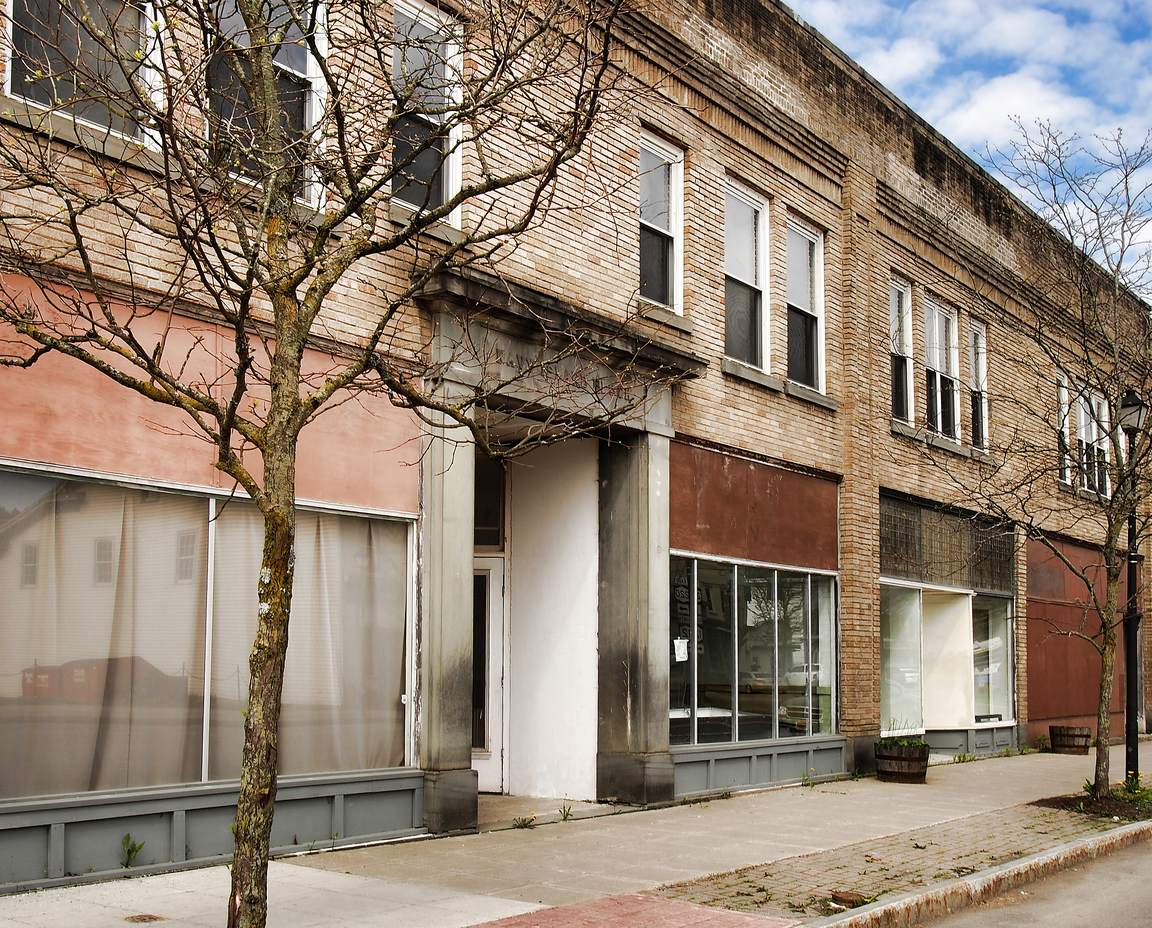
Small independent business premises, empty, in daylight

Business owners policy coverage for small and mid-market operations

A business owners policy bundles general liability, commercial property and business interruption into a single carrier form, typically at a lower combined premium than buying each piece separately. It is designed for small and mid-market operations with fixed locations and moderate hazard, and it is defined by eligibility rules rather than by statute.

Talk to an expert

Get a quote

Continue

The bundle

What a business owners policy covers

A BOP combines three distinct coverage components into one policy. Each responds to a different category of loss, and the value of the bundle is that one form answers all three rather than three forms arguing about which of them should.

01In the bundle

General liability. Third parties, and what you owe them.

Third-party bodily injury, property damage and personal and advertising injury, with defense costs typically included. A customer slips in your shop, or an ad is alleged to infringe a competitor's copyright.


02In the bundle

Commercial property. The premises and everything in it.

Your building if you own it, plus business personal property, inventory and equipment against covered perils. Fire, theft, wind, vandalism, or water damage from a plumbing failure.

03In the bundle

Business interruption. The income while you are shut.

Lost revenue and continuing fixed expenses while your premises are repaired after a covered property loss. Rent, utilities, payroll and loan payments through a rebuild.

04Carrier-dependent

Cyber and data compromise.

Offered as an endorsement with its own sub-limit, commonly $25,000 to $50,000. Useful for a business with modest data, and thin for one that processes payments daily.

05Carrier-dependent

Equipment breakdown.

Mechanical and electrical failure of plant, which the property section itself excludes. For a business whose revenue depends on one machine this is not optional.

06Carrier-dependent

Hired auto and employee dishonesty.

Two more extensions, priced and offered differently by every carrier. This is one reason two BOPs at the same premium are rarely the same policy.

Two of the three are worth understanding on their own, because the BOP's version of each is the standardised one. There is more on the property half of the bundle, on its own and on the income you lose while closed, both of which behave the same way inside a BOP as outside it.

Eligibility

Four operations, four different eligibility conversations

BOP eligibility is defined by carriers rather than by statute. In practice it aligns with businesses that have predictable, moderate-risk exposures, a fixed physical location, and revenues generally under $5 million to $10 million.

Retail shops

Foot traffic creates bodily injury exposure and inventory creates property exposure. A BOP addresses both in one form, which is the case it was built for.

What underwriters askSquare footage, foot traffic, stock values, and your lease
The claim that shows upA customer injured on the floor, or stock lost to fire or water
Endorsements it needsPeak stock limits, and cyber if you take card payments
Watch forSeasonal stock swings are rated on what you declare, and a BOP's property section applies coinsurance exactly the way a standalone policy does.Talk to a broker about this

Real estate agents and property managers fit the form well, though E&O still has to be placed separately. Contractors with a fixed office or showroom can put the back-office exposure on a BOP, but on-site work usually needs its own general liability. E-commerce with physical inventory carries real property exposure in a warehouse or fulfilment space even when every customer interaction happens online. Each of those three fits, with a condition attached.

Back of house storeroom with stock and equipment

What a bundled form does and does not answer

The value of a BOP is that one form responds to three different kinds of loss. The risk is that the same packaging makes people assume it responds to everything, and the exclusions on it are hard rather than negotiable.

Four losses at the same premises, and which of them the bundle answers:

Covered: A customer trips on your front mat and sues. The general liability component, with defense included.

Not covered: A client sues over advice your staff gave. That is professional liability, and no BOP endorsement reaches a serious one.

Covered: A burst pipe destroys a storeroom of inventory before your busiest season. Property, plus the income you lose while you recover.

Not covered: Rising groundwater floods the same storeroom. Plumbing failures are typically covered; flood is specifically excluded.

The pattern is worth naming. A BOP excludes lines of coverage that have their own underwriting. They are not missing by accident, they are missing because they do not fold into a standardised, rate-table product, which is the same reason the policy is quick and cheap. Where advice is your product, the answer is a policy that answers for your advice, placed beside the BOP rather than inside it.

The gaps

What a business owners policy does not cover

This is where most operators get caught short, because a BOP is bought on price more often than any other commercial policy. Eight hard exclusions, and five of them catch businesses out regularly.

Professional liability

WHAT YOU NEED

A standalone E&O policy. If your staff give advice, design work or professional services that cause a client financial loss, the liability component does not respond.

Employee injuries

WHAT YOU NEED

Workers compensation. A BOP excludes injuries to your own staff outright, with no endorsement route around it.

Business vehicles

WHAT YOU NEED

A commercial auto policy. Owned vehicles sit outside the liability component; rented or borrowed ones may have limited cover by endorsement.

Flood

WHAT YOU NEED

A separate policy, NFIP or private. Plumbing failures are typically covered and rising groundwater is not, which is a distinction learned expensively.

Earthquake

WHAT YOU NEED

An endorsement or a standalone policy. Excluded on standard forms in every market.

Employment practices

WHAT YOU NEED

An EPLI policy. Wrongful termination and discrimination claims sit outside the form entirely.

Directors and officers

WHAT YOU NEED

A standalone D&O policy. Running the company is not the same as operating the premises.

Cyber beyond the endorsement

WHAT YOU NEED

A standalone cyber policy. Data compromise sub-limits of $25,000 to $50,000 are rarely enough for a business that stores customer data or processes payments.

When professional services are the core of what you do, a narrow endorsement will not answer a six-figure claim from a client. That is the most consequential gap on this page and the one most often found after the fact. If you carry staff, cover for your own staff has to sit beside the BOP as well, because the form will not reach them.

The ceiling

A BOP is a pre-packaged form. The real question is when you grow out of it.

A business owners policy is a standardised product built on prescribed forms, with defined eligibility and rating from actuarial tables. That is exactly why it is cheap and fast, and exactly why it has a ceiling. The Insurance Information Institute publishes a primer on how BOP eligibility is structured, and the SBA lists the bundle as a starting point for small business cover. Both descriptions contain the same word: starting.

Tape measure and rule laid across a work surface

Eligibility is a carrier's rule, not a law

In practice a BOP fits predictable, moderate-hazard businesses with a fixed location and revenues generally under $5 million to $10 million. Nothing about that is statutory, and every carrier draws the box slightly differently, which is why a risk declined by one market is routinely written by another without anything about the business having changed.

Matching storage boxes stacked neatly on shelving

A package policy is the same cover, individually underwritten

A commercial package policy has no revenue ceiling and is fully modular. It is more flexible and slower to quote, because a person underwrites it rather than a rate table. For a small single-location business that is a worse deal. For a growing one it stops being a worse deal at a fairly identifiable moment.

Stockroom shelving loaded past its capacity

The signals arrive before the renewal does

Revenues pushing past $10 million. A carrier declining your BOP renewal. Contracts requiring limits above BOP maximums. Operations spanning states with meaningfully different exposures. Specialised high-value equipment the form cannot schedule properly. Any one of those is worth a conversation before the anniversary rather than after it.

The point is not that a BOP is inferior. For a single-location business with predictable risk it is the most efficient product in the market. The point is that it is a product with a ceiling, and the most expensive moment in a business's insurance life is the year it has outgrown the form and nobody has said so. Where the property side is the half that has grown, start with the property half of the bundle, on its own.

Speak to our team

Fit check

Tick what your operation actually involves

Each line below either needs an endorsement onto the BOP or a separate policy beside it. Nothing here is priced and nothing here is a quote.

What has to sit beside the bundle

Tick what applies and the cover it implies appears here.

The last line is the one to act on early. Finding out you have outgrown the form at renewal, from a declinature, is the expensive way to learn it.

Speak to our team

Cost

What drives the cost of a business owners policy

A BOP is rated from standardised tables, which is what makes it quick to quote and why the inputs are consistent across carriers. Six of them move the premium more than the rest.

01

Industry and class code

Higher-hazard industries such as restaurants, contractors and auto services pay more than office-based operations, and the class code is the first thing a rate table looks at.

Effect on premium
02

Claims history

Prior claims, and liability claims especially, have a direct impact on renewal pricing. On a standardised product there is less room to argue them away.

Effect on premium
03

Property value and type

Replacement cost of the building and its contents, with older buildings costing more to insure on both halves of the form.

Effect on premium
04

Annual revenue

Higher revenue generally increases the liability premium, because revenue correlates with how much exposure is passing through the business.

Effect on premium
05

Location

Urban markets with higher claim frequency and higher rebuilding costs raise both the liability and the property side at once.

Effect on premium
06

Headcount and limits selected

More staff increases liability exposure and, on some forms, payroll-based components. Higher GL limits at $2M/$4M against $1M/$2M, and higher property limits, increase the premium proportionally.

Effect on premium

Three marks is an input that moves a BOP premium more than the others here. It is a relative weighting drawn from how carriers rate, not a rate and not a quote.

On published figures

BOP premiums vary more than most published averages suggest, because the policy covers two distinct risk pools in one form. Published averages for small businesses run roughly $80 to $141 per month, but those reflect straightforward, low-hazard operations. Deductibles move it too, and most standard BOPs carry property deductibles in the $500 to $2,500 range. The only accurate figure is a real quote for your specific business.

Talk to an expert

Process

How a placement works

We understand your business first, then take it to the carriers who want to write it. An advisor walks you through the options and what they cost. No two files are the same, so what follows is the shape of a placement rather than a script.

  1. Loss runs and a payroll schedule spread on a desk beside a calculator and laptop

    We build the submission around your real exposure

    A restaurant needing extended business interruption and a liquor endorsement is a different file from a tech firm needing higher data-compromise limits, even though both are asking for a BOP. Getting that right at the start is what decides which markets look at it.

  2. Brokerage desk with a monitor in morning light

    We submit beyond the one preferred market

    Most brokerages quote a BOP through one or two preferred carriers, which is fast for the broker rather than best for the client. Your information goes to standard markets and to E&S lines for operations that do not fit the standard box.

  3. Stamped certificate on a clipboard with a pen and a magnifier

    We read the wording before you bind

    Where two carrier forms look identical on price but differ on defense costs or exclusions, we show you the difference. That includes how COIs get issued afterwards, which a landlord will ask for in the wording the lease specifies.

General liability, commercial property and business interruption in one carrier form, usually at a lower combined premium than buying the three separately.

Carriers decide, not statute. In practice it suits predictable, moderate-hazard businesses with a fixed location and revenues generally under $5 million to $10 million, and every carrier draws the box slightly differently.

No, and this is the single biggest gap on the form. If advice or design work is the core of what you do, you need a standalone errors and omissions policy beside the BOP.

No. Employee injury is workers compensation, which a BOP excludes outright with no endorsement route around it.

No. Plumbing failures are typically covered and rising groundwater is not. Flood needs a separate policy, and so does earthquake.

Often as an endorsement with a sub-limit, commonly $25,000 to $50,000. For a business that stores customer data or processes payments that is rarely enough, and a standalone policy is the answer.

A BOP is standardised, rated from tables and quick to quote. A package policy is individually underwritten, has no revenue ceiling and is fully modular. One is efficient and the other is flexible.

Revenue pushing past $10 million, a carrier declining your renewal, contracts requiring limits above BOP maximums, operations across states with different exposures, or equipment the form cannot schedule properly.

Get started

Bundle your core coverage into one policy

Whether you run a single storefront or a growing mid-market operation, we will place a business owners policy that fits the exposures you actually carry, and tell you plainly if you are close to the point where a package policy would serve you better.

  • Standard and E&S markets, not one preferred carrier
  • 100+ carrier portals
  • Wording compared before you bind
Small commercial storefront exterior in daylight
Export Design
Download files for your developer
General
WordPress Builders